
Why you lose track of projects so quickly
At the start of a project, everything is usually clear. There is an idea, a goal and a few first tasks. Everyone roughly knows what it is about.
Then everyday work begins.
One task is added. Another is postponed. Someone writes a message about it. A decision is made verbally in a conversation. Later, someone looks for exactly this information and cannot find it anymore.
This creates the typical project feeling: A lot is actually happening, but no one sees the whole picture anymore.
The problem is rarely a lack of effort. Most of the time, everyone is working hard. There is only no shared place where the current status stays visible.
Overview does not mean control
Many people immediately think of control when they think of project overview. Who does what. Who is late. Who has not delivered yet.
But that is not the real point.
A good project overview helps the team. It makes work visible before it becomes a problem. It shows where something is stuck. It prevents duplicate work. And it makes sure that fewer things are forgotten.
Overview is therefore not a tool for applying pressure. It is more like a good map. You see where you are, what the next step is and where things might get tight.
Everyday work needs simple answers
The same questions keep coming up in everyday project work.
- What is currently open?
- Who is taking care of it?
- What is important?
- What is waiting for feedback?
- What has already been done?
- What comes next?
If these questions cannot be answered quickly, every project becomes difficult. Then unnecessary messages, follow-up questions and meetings are created.
A good project system therefore does not have to do everything. But it should answer exactly these questions easily.
Tasks are the key to overview
Projects are often thought of as too big. There are goals, milestones, ideas, discussions and plans. All of that is important. But in everyday work, a project moves through tasks.
A task is specific. It can be completed. It has a responsible person. Ideally, it has a clear description.
When tasks are recorded cleanly, more overview is created automatically. The team sees not only the big project, but also the next real steps.
That is exactly why it makes sense not to look at projects and tasks separately. A project without tasks remains abstract. A task list without project context quickly becomes chaotic.
Search less, work more
One of the biggest time wasters in projects is searching.
- Where is the current task?
- Who made the last change?
- Which version is correct?
- Has this already been discussed?
- Do I still need to deliver something?
Each of these questions costs energy. Not much at once, but constantly a little. Over weeks, this becomes a real problem.
A good project overview reduces this searching. Information does not have to be documented perfectly, but it should be where the team expects it.
The goal is not to write everything down. The goal is that important information does not get lost.
Project overview in a team is teamwork
Overview is not created by one person keeping everything in their head. That may work for a short time, but not permanently.
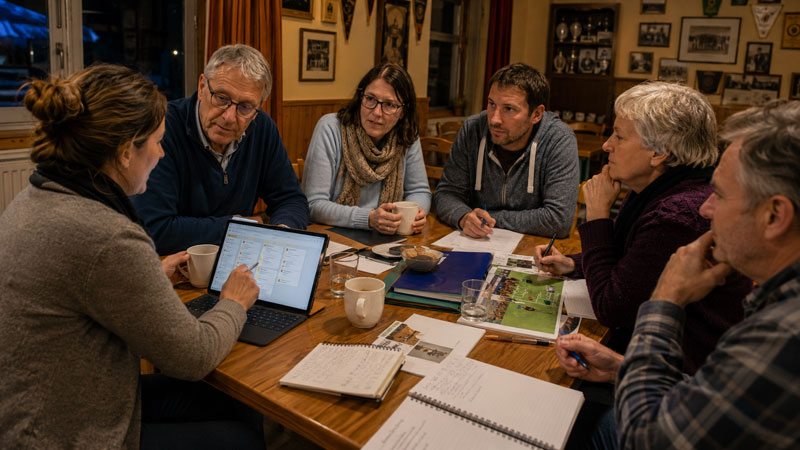
As soon as several people work together, the team needs a shared view of the project. Otherwise, different truths emerge.
- One person thinks the task is urgent.
- Another is still waiting for input.
- A third believes the topic has already been completed.
Such misunderstandings happen quickly. They are normal. But they can be avoided if everyone can see the same current status.
Project overview is therefore not a task for project managers alone. It is a shared way of working.
Too much planning can also be harmful
Of course, you can plan projects in great detail. With many fields, dependencies, views and reports.
That sounds professional at first. But in everyday work, it can quickly become too much.
If a tool needs more maintenance than the project itself, something is wrong. Then the system is no longer used. Or it is maintained by only one person while the rest go back to working through messages and spreadsheets.
A good overview must stay easy. Otherwise it will not last.
For many teams, a simple project status is better than a perfect plan that is never up to date.
What really helps in everyday work
In everyday work, simple habits help most of all.
- Tasks should be created where they are needed.
- Responsibilities should be clear.
- The current status should be visible.
- Completed tasks should not be in the way.
- Open points should not disappear in chats.
That sounds unspectacular, but it is extremely effective. Because project overview usually does not come from a big restart. It comes from many small clear decisions.
Overview for people who are not in the tool
The question "how far along are you?" rarely comes from inside. It comes from the client, from management, from a partner, from someone who does not follow the project daily.
The usual answer is a status report someone puts together by hand. It is correct on the day it is written and never again after that. Next time the work starts over.
An overview you have to produce first is not an overview.
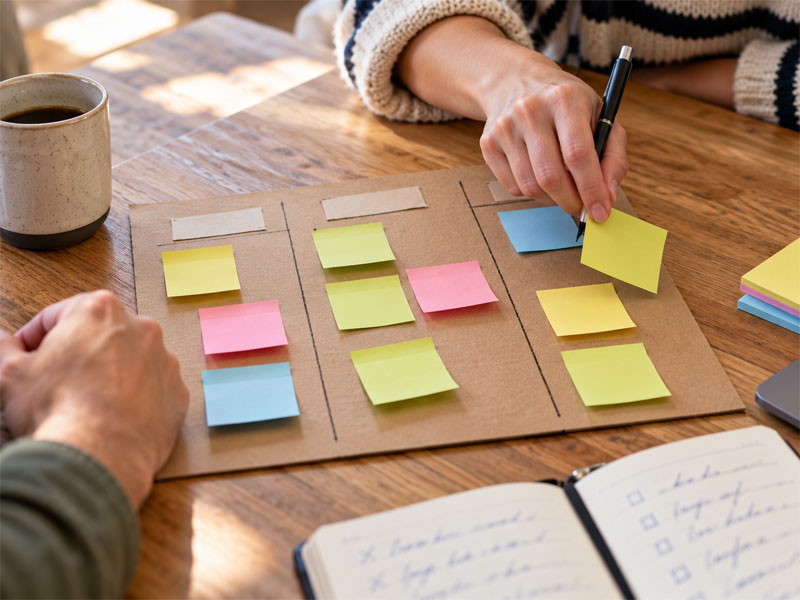
That effort disappears as soon as the current state is visible by itself. A kanban board can be passed on by link – no access, no account, nobody exporting anything first.
How Projoodle can help
Projoodle is designed to organize projects and tasks easily. Not as a heavy planning system, but as a clear place for what really needs to be done in the team.
This is especially important in everyday work. Teams do not need additional complexity. They need an easy way to turn ideas into specific tasks, keep responsibilities visible and keep the project status understandable.
Projoodle can help close the gap between project idea and daily work.
Overview does not have to be perfect
A common mistake is expecting to always have everything fully under control.
That rarely works.
Projects change. People are busy. Information arrives late. Priorities shift.
A good project overview must be able to handle that. It does not have to be perfect. It has to be useful.
If a team quickly recognizes what is important right now, what remains open and where adjustments are needed, a lot has already been gained.
Conclusion
Project overview in everyday work is created not through more meetings, more spreadsheets or more complicated processes.
It is created when tasks are visible, responsibilities remain clear and everyone on the team can see the same status.
If you want to keep projects clear, you should therefore simply start: fewer scattered pieces of information, clearer tasks and a shared place for the current project status.
This turns project management from an additional effort into help in everyday work.
Related: project management · What is Projoodle