
Project management tools almost always have the same goal.
They should help you keep an overview and work more efficiently.
The problem develops gradually.
With every new feature, the tool becomes more extensive and at the same time harder to use.
At some point, you spend more time in the tool than on the actual project.
When help turns into effort
Many tools try to be everything at once.
They offer countless features, settings and views.
This sounds good at first, but often leads to a completely different effect.
You constantly have to think about where to enter something, how to structure it or which feature you even need.
That costs energy and slows you down in everyday work.
Complexity often appears late
At the beginning, a tool still seems clear.
But the longer you work with it, the more things accumulate.
More projects, more tasks, more options.
At the latest when new team members join, it becomes obvious.
They first have to learn the system instead of being able to start right away.
And this is exactly where valuable time is lost.
What teams really need
Most teams do not need a system that can do everything.
They need a system that is clear.
One look should be enough to understand what is being worked on, what is open and what comes next.
That is what matters.
Fewer features, more focus
A good tool does not feel complicated.
It guides you through your work without making you think for long.
You open it and immediately know where you stand and what to do.
This is not a coincidence, but the result of conscious reduction.
The typical mistake
Many providers develop their tools from a feature perspective.
The goal is to create more and more possibilities.
What is often forgotten is the perspective of the users.
In everyday work, it is not about being able to do as much as possible, but about making progress as easily as possible.
The first hurdle comes before the first click
One form of complexity is rarely talked about: before anyone can even see a task, they need an account.
For your own team that is bearable. It gets difficult with everyone else. The client who is supposed to sign something off. The freelancer who works with you for three weeks. The colleague from another department who contributes one file.
They all need credentials, a password and, in case of doubt, approval from IT. For a single look at a board.
A tool that everyone has to set up before they are allowed to take part is not simple. It only moves the effort to the front.
That is why a kanban board or a to-do list in Projoodle works without registration. You share a link, the other person sees the tasks. Nothing else needed.
A different approach
There is another way.
Instead of building more and more features, you can consciously focus on what teams really need.
Projects, tasks and collaboration.
This is exactly the path Projoodle follows.
Here, it is not about the number of features, but how quickly you can start working.
You should open a tool and immediately understand what to do.
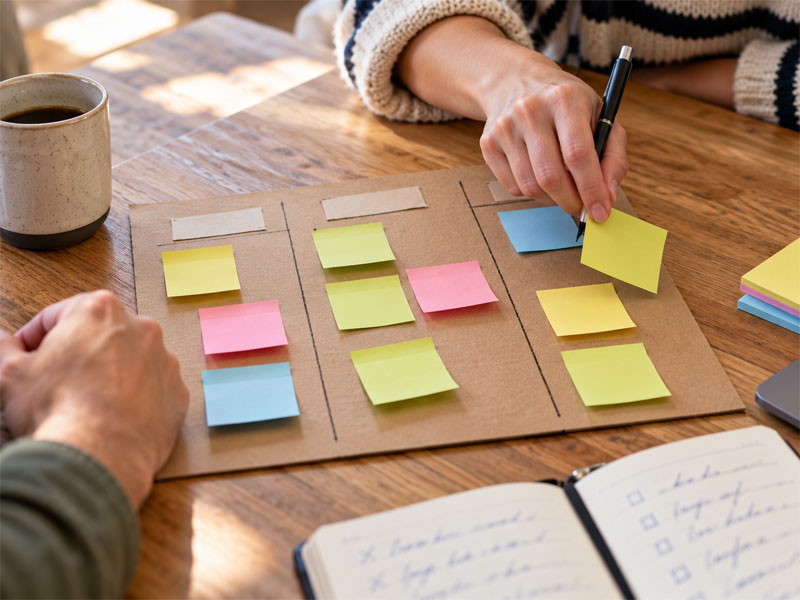
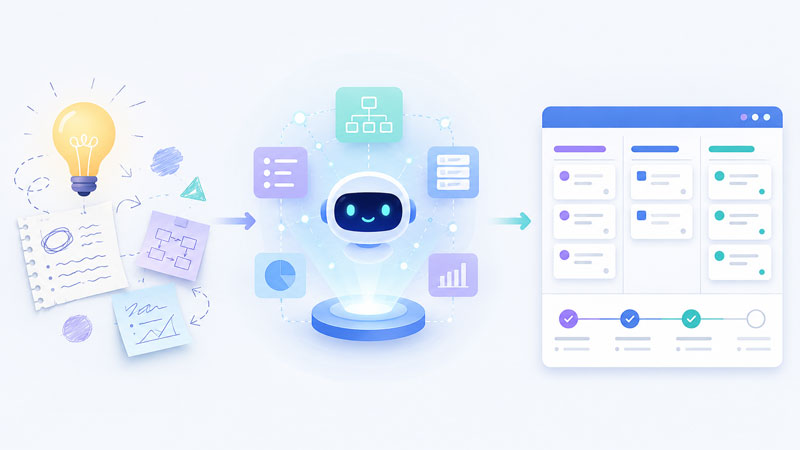
For example, you can turn a simple idea directly into tasks or structure projects so they are clear at a glance.
The goal is not to map everything, but to make your daily work easier.
Conclusion
Complexity often seems like an advantage, but rarely is.
The best tools are the ones you do not have to explain.
If you notice that your current system slows you down instead of supporting you, it is worth taking a closer look. A good test: how long does it take for someone outside to see what you are working on?
You can try what project management looks like in Projoodle without registering. And if your current system happens to be a spreadsheet, continue with Excel is no longer enough.
If you would rather compare concrete options first, the best free project management tools for small teams are side by side here, with their limits.